Apr 1, 2026
Dec 22, 2025
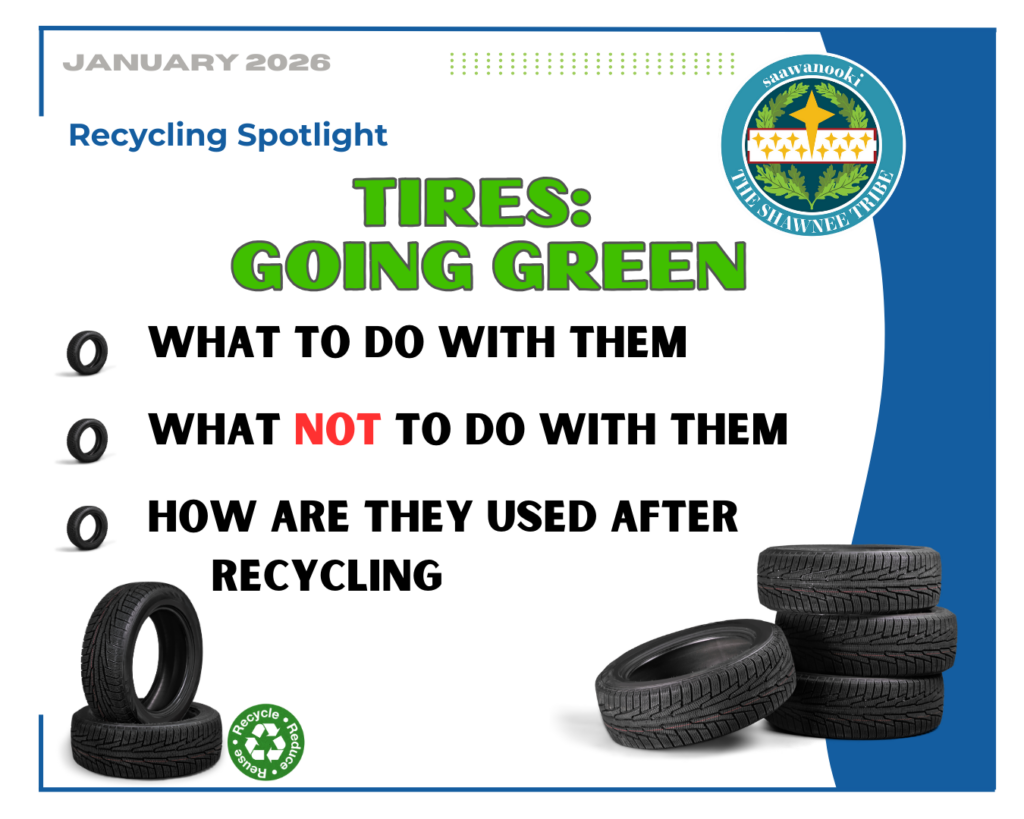
RECYCLING SPOTLIGHT: WHAT TIRE RECYCLING IS
Tire recycling (or rubber recycling) is the process of collecting worn-out tires and reprocessing them into useful materials instead of letting them take up space in landfills. Because tires are durable and don’t break down easily, recycling them protects the environment, reduces fire risks, and eliminates potential mosquito-breeding sites in improperly disposed tire piles.
Common Recycling & Reuse Options
- Retreading: Some tires that aren’t completely worn can be retreaded for further use, extending their life.
- Crumb rubber: Tires can be shredded and used in playground surfaces, rubberized asphalt, artificial turf infill, or other construction materials.
- Tire-derived fuel (TDF): Shredded tires can also be used as supplemental fuel in industrial processes — a recycling option but generally less preferred.
- Creative repurposing: Old tires can be reused in DIY projects like planters, swings, garden edging, or outdoor furniture.
WHAT TO DO WITH THEM?
1. Take Them to a Tire Dealer When You Buy New Tires.
If you’re replacing tires on your vehicle, the easiest way to recycle the old ones is to leave them with the tire shop. Most dealers will recycle scrap tires for you (often for a small fee) as part of the service.
2. Drop Tires Off at Recycling or Disposal Centers.
Older tires that aren’t taken to a tire shop can be brought to recycling or solid waste handling centers that accept tires. Some recycling centers charge a per-tire fee or limit the sizes they can accept — calling ahead can save time.
Community Tire Recycling Events
Many recycling centers host special collection or cleanup events where residents can bring old tires for recycling, usually at low or no cost. These events are often organized by local 2 of 3 governments, tribes, or environmental groups and are commonly advertised on social media and local outreach channels.
WHAT NOT TO DO WITH THEM?
- Don’t throw whole tires in your regular trash — many landfills won’t accept them unless they’re cut up or prepared properly.
- AVOID dumping tires outdoors — they trap water and can become mosquito breeding grounds and fire hazards.
- NEVER burn tires — burning releases toxic chemicals into the air and is harmful to both human health and the environment.
Sources:
Discount Tire
Continental Tires
Wikipedia
Department of Natural Resources (MO)